Grief is linked to inflammation, but nobody has shown that one drives the other. A new systematic review of 18 studies found that bereavement and more severe grief went with higher IL-6 and related immune signals in the blood. Most of that work comes from one research program, so the authors call it exploratory.
What the new study did
The authors call bereavement one of life's most stressful events. Most people carry it and slowly find their footing. A minority develop grief that lasts and makes daily life hard.
Could something in the body flag who is at risk? To find out, a research team searched five databases for studies that measured a body marker in bereaved family members and also used a tested scale for grief or coping. They looked in three places: cortisol, the main stress hormone; inflammation and immune markers; and heart and nervous system measures. Eighteen studies qualified.
Family members of any age and any relationship to the person who died were eligible.
What it found
Start with cortisol. In 3 of the 5 cortisol studies, more severe grief went with a blunted or flatter daily cortisol pattern. Flatter means the hormone rises and falls less across the day.
Widowed adults showed a steeper rise in IL-6 per hour under a lab stress test than adults who were not widowed.From a 2025 study in Psychoneuroendocrinology
Then the blood. Bereavement and heavier grief were linked to raised IL-6, IL-1RA and related cytokines. Cytokines are the chemical messages immune cells use to talk to each other, and IL-6 (interleukin-6) is one that rises when inflammation is switched on. One study also found a different pattern of interferon gene activity, part of the body's antiviral defense, in complicated grief than in grief that was easing normally.
Heart and nervous system results were mixed. They depended on things like coping style and hard childhood experiences.
| What was measured | What the review found | The catch | Source |
|---|---|---|---|
| Cortisol | Flatter daily pattern with more severe grief in 3 of 5 studies | Some links weakened as time passed | |
| Inflammation and immune markers | Higher IL-6, IL-1RA and related cytokines | 5 of 7 studies appear to come from one program | |
| Heart and nervous system | Mixed | Depended on coping style and childhood adversity |
What it can't tell us
The authors say plainly that the evidence is exploratory. Four reasons stand out.
One team. Five of the seven inflammation studies appear to come from one research program. Our working: take away those five and two studies remain, so the inflammation finding rests on at most three independent groups. One lab can be right. It still needs other labs to repeat it.
No parents. Across all 18 studies, only one participant was an identifiable bereaved parent. Parents who have lost a child may grieve in ways this research has simply never measured. The authors want them studied next.
Timing. Some cortisol links weakened with time since the loss, so they may not be steady markers of how hard someone is grieving.
Direction. All 18 were observational studies. They show what goes together, not what comes first.
How it fits with earlier research
A run of studies of recently widowed older adults, by overlapping research teams, fills in the picture.
In 2019, 99 people gave blood about 85 days after a spouse died. Those above an established cutoff for severe grief had higher IFN-γ, IL-6 and TNF-α, three cytokines tied to inflammation. A 2021 follow-up checked again at six months. Among people who were not depressed at three months, higher inflammation predicted clinical depression three months later. Then in 2025, 143 widowed adults and 69 who were not widowed took a standard lab stress test. IL-6 climbed more steeply per hour in the widowed group.
That matters because of the heart. A UK study matched 30,447 people aged 60 to 89 whose partner died with 83,588 whose partner was alive. Within 30 days, 50 of the bereaved (0.16%) had a heart attack or stroke, against 67 of the others (0.08%).
Our working, in plain numbers. 0.16% is 16 in 10,000 people. 0.08% is 8 in 10,000. So for every 10,000 bereaved older adults, about 8 extra heart attacks or strokes happened in that first month. That is roughly 1 extra event for every 1,250 people: real, and still rare for any one person. The extra risk faded after 30 days. The 2025 authors suggest inflammation may be one shared path to both depression and heart trouble after a loss. That is a lead, not a finding.
Does depression cause inflammation, or the other way round?
Both, a little. A 2021 meta-analysis of 38 studies with 58,256 people found that higher CRP and IL-6 went with more depressive symptoms later, and that more depressive symptoms went with higher CRP and IL-6 later. CRP (C-reactive protein) is a blood marker the liver makes when there is inflammation. After adjusting for other factors, the links were small.
Is depression inflammation, then? Not on its own. Many people with depression do have raised inflammation, but it is not required for depression to start. Still, in 11 randomized trials of depressed people with a CRP of 2 mg/L or higher, anti-inflammatory drugs reduced depressive symptoms modestly. They did not raise the share of people who responded or recovered.
Loneliness, which often follows a loss, tells a similar mixed story. A 2020 meta-analysis found no link between loneliness and CRP, but did find one with IL-6 in the most-adjusted analyses.
Should you change anything?
Tick what you'll try this week. Your picks stay on this device.
grief still makes daily life hard many months after the loss, or comes with low mood, poor sleep or loss of interest that won't lift. Ask too if you have heart disease, high blood pressure or diabetes and have recently lost someone close, or if you are thinking about a daily anti-inflammatory and have kidney disease, stomach ulcers or take a blood thinner. If you have thoughts of harming yourself, call or text 988 in the US, any time.
One tap. Results appear once 50 readers have voted, and the count is always real.
Reader stories
What happened for you?
Studies tell us what works on average. You know what happened in your own body. Share it here, and the next person who reads this page gets something no study can give them.
A reader who shared their story here sent you this article. When you're ready, add yours.
Ask the Research Desk
Heard something about inflammation you want checked? The best questions become articles, credited by first name only if you say yes.
How this article was made
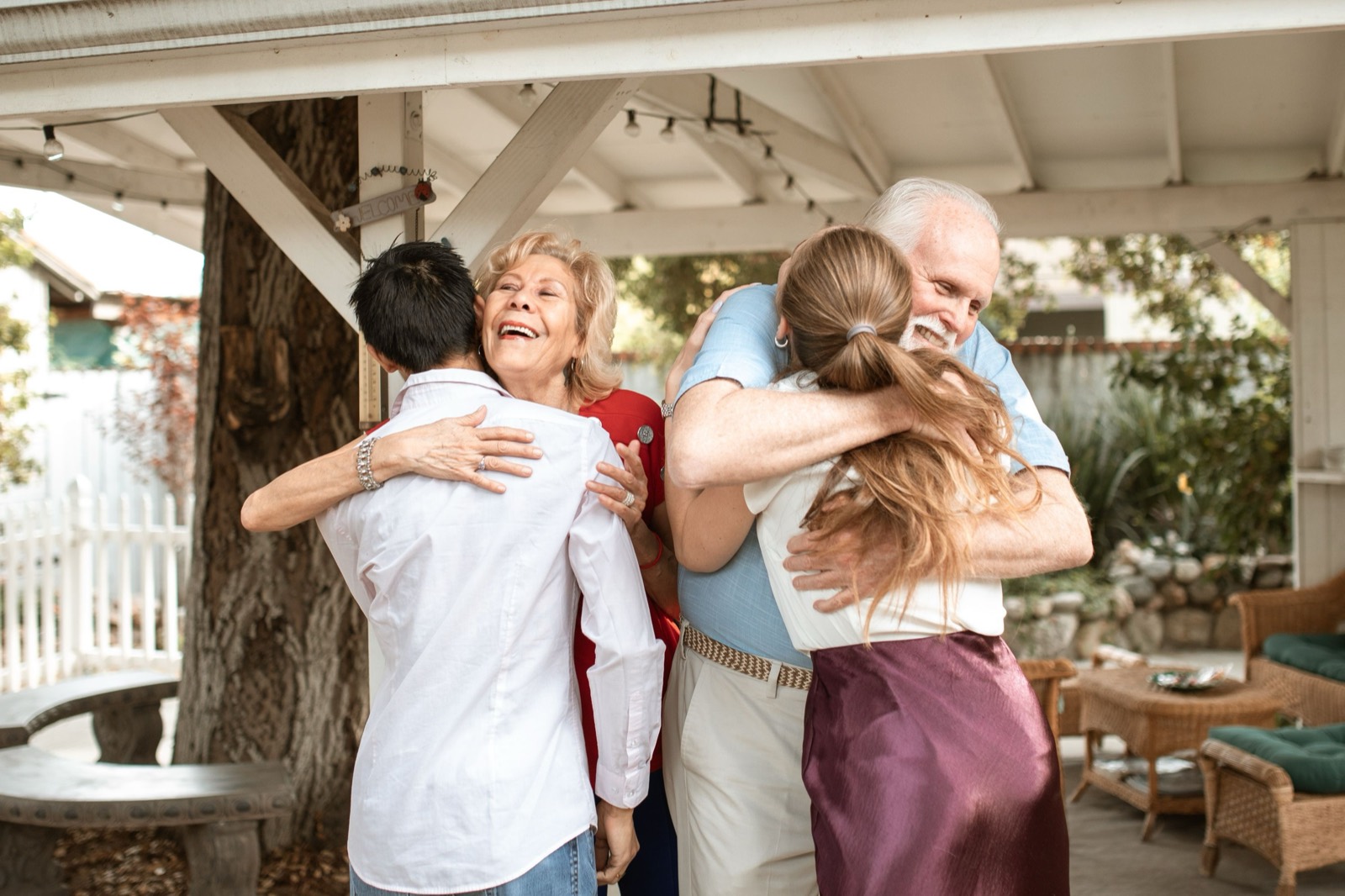
Researched and written from 10 peer-reviewed papers. Our automated check matched every claim against the exact words of its source, confirmed every paper exists in PubMed, and found none retracted. Checked November 21, 2026. Not individually reviewed by a doctor. Photos are illustrative; the people in them are not patients or readers.
Grades run Strong, Moderate, Emerging, Early and Not supported, and the grade decides the words we may use. How we grade evidence · Medical disclaimer
Sources
- Systematic reviewBiological markers of grief in bereaved family members: A systematic review of cortisol, inflammatory and cardiovascular studies.Thirumalai S, Hutchings G, Prigerson HG et al. Psychoneuroendocrinology, 2027.PubMedFull paper
- Cross-sectionalGrief, depressive symptoms, and inflammation in the spousally bereaved.Fagundes CP, Brown RL, Chen MA et al. Psychoneuroendocrinology, 2019.PubMedFull paper
- StudyInflammation and future depressive symptoms among recently bereaved spouses.Wu EL, LeRoy AS, Heijnen CJ et al. Psychoneuroendocrinology, 2021.PubMedFull paper
- StudySpousal bereavement enhances proinflammatory cytokine production to acute, psychological stress.Wu-Chung EL, Brown RL, Suchting R et al. Psychoneuroendocrinology, 2025.PubMedFull paper
- CohortIncreased risk of acute cardiovascular events after partner bereavement: a matched cohort study.Carey IM, Shah SM, DeWilde S et al. JAMA Intern Med, 2014.PubMedFull paper
- Meta-analysisPrevalence of prolonged grief disorder in adult bereavement: A systematic review and meta-analysis.Lundorff M, Holmgren H, Zachariae R et al. J Affect Disord, 2017.PubMedFull paper
- Meta-analysisThe longitudinal associations of inflammatory biomarkers and depression revisited: systematic review, meta-analysis, and meta-regression.Mac Giollabhui N, Ng TH, Ellman LM et al. Mol Psychiatry, 2021.PubMedFull paper
- Meta-analysisEffect of Anti-Inflammatory Treatment on Depressive Symptom Severity and Anhedonia in Depressed Individuals With Elevated Inflammation: Systematic Review and Meta-Analysis of Randomized Controlled Trials.Mac Giollabhui N, Madison AA, Lydston M et al. Am J Psychiatry, 2026.PubMedFull paper
- Meta-analysisGrief-focused cognitive behavioral therapies for prolonged grief symptoms: A systematic review and meta-analysis.Komischke-Konnerup KB, Zachariae R, Boelen PA et al. J Consult Clin Psychol, 2024.PubMedFull paper
- Meta-analysisThe association between loneliness, social isolation and inflammation: A systematic review and meta-analysis.Smith KJ, Gavey S, RIddell NE et al. Neurosci Biobehav Rev, 2020.PubMedFull paper